logo
বাড়ি

ব্লগ সম্পর্কে Isothermal RPA Kits Advance Rapid Molecular Diagnostics

সাক্ষ্যদান
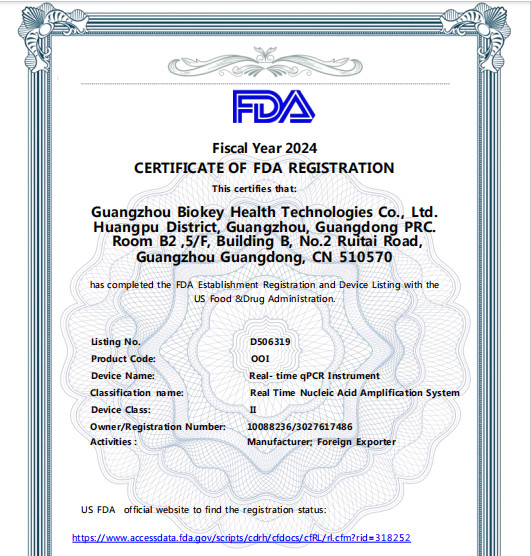
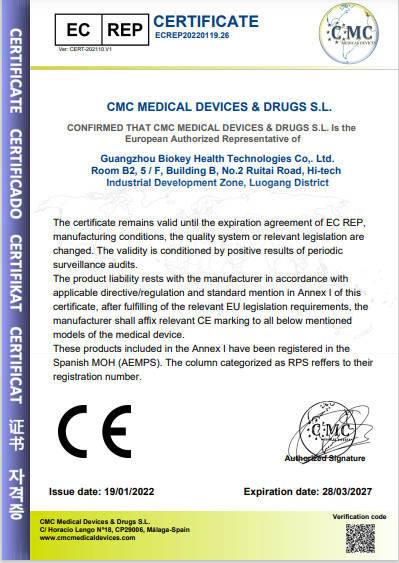
চীন Guangzhou BioKey Healthy Technology Co.Ltd সার্টিফিকেশন
তোমার দর্শন লগ করা অনলাইন চ্যাট এখন
কোম্পানির ব্লগ
Isothermal RPA Kits Advance Rapid Molecular Diagnostics
সর্বশেষ কোম্পানির খবর Isothermal RPA Kits Advance Rapid Molecular Diagnostics

A newly detailed RPA endpoint amplification kit is designed to simplify DNA testing in time-sensitive diagnostic and field settings by removing the need for thermal cycling equipment. The system uses recombinase polymerase amplification at a constant low temperature and is supplied as a lyophilized premix. Its format is intended to support rapid deployment across a range of sample types and readout methods.

Isothermal amplification bypasses thermal cycling

RPA technology runs at a constant 37°C to 42°C, a departure from traditional PCR, which relies on thermal cyclers to cycle through denaturation, annealing, and extension. The endpoint kit uses a lyophilized premix format that simplifies handling and supports stability during ambient transport and storage, according to product specifications.

The kit is reported to complete high-sensitivity, high-specificity DNA amplification in 10 to 20 minutes. It requires only a simple water bath or heating block rather than an expensive thermal cycler, reducing equipment demands in settings where speed and portability matter.

Compatibility features include support for multiple sample types, such as crude extracts and purified nucleic acids, as well as lateral flow and electrophoresis readouts. The system also requires only a one-step reconstitution, allowing it to be integrated into existing diagnostic workflows.

  • Rapid detection: high-sensitivity, high-specificity amplification is completed in 10 to 20 minutes.
  • Constant-temperature operation: no thermal cycler is required, only a water bath or heating block.
  • Broad compatibility: supports crude extracts, purified nucleic acids, lateral flow, and electrophoresis.
  • Workflow integration: one-step reconstitution supports use in a range of diagnostic settings.
Reaction parameters set performance targets

The kit's recommended reaction conditions call for primer lengths of 30 to 35 nucleotides and primer GC content between 30 percent and 60 percent. Amplicon targets should remain between 80 and 200 base pairs, with each primer used at a concentration of 0.4 to 0.5 µM.

Parameter Recommended standard
Reaction temperature 37°C – 42°C
Amplification time 10 – 20 minutes
Primer length 30 – 35 nt
Primer GC content 30% – 60%
Amplicon length 80 – 200 bp
Primer concentration 0.4 – 0.5 µM each

The parameters are intended to help laboratories standardize assays while maintaining the isothermal format's speed advantage. The reaction temperature remains within the narrow low-temperature range that defines RPA chemistry.

Applications span pathogen detection and environmental monitoring

The kit is intended for pathogen detection, environmental monitoring, and analytical assay development. Customization options include adjustments to volume, concentration, formulation, format configuration, and master mix composition.

Each component batch undergoes quality testing before and after formulation and after lyophilization, according to the product information. That testing regimen is designed to ensure consistent performance across delivered lots.

Field testing benefits from minimal equipment

Because the reaction does not require thermal cycling, field and point-of-care testing scenarios can use basic constant-temperature equipment. A heating block, water bath, or incubator set to 37°C to 42°C is sufficient to initiate the reaction, alongside standard laboratory consumables and target primers.

Such requirements may make the format suitable for decentralized testing environments where conventional PCR infrastructure is unavailable or impractical. The endpoint format is also compatible with common downstream readouts, including lateral flow strips and gel electrophoresis.

Frequently Asked Questions
What basic equipment is needed for an RPA reaction?
A constant-temperature device such as a heating block, water bath, or incubator set to 37°C to 42°C, along with pipettes, nuclease-free water, centrifuge tubes, gloves, and target primers.
How does RPA differ operationally from traditional PCR?
RPA is an isothermal amplification method, so it does not require a thermal cycler for denaturation, annealing, and extension. Recombinase and single-stranded binding proteins work together to enable exponential amplification at 37°C to 42°C, shortening testing time.
How should primers be designed for optimal RPA performance?
Primers should be 30 to 35 nucleotides long, with GC content between 30 percent and 60 percent. Amplicon targets should remain between 80 and 200 base pairs.
পাব সময় : 2026-10-24 00:00:00 >> blog list
যোগাযোগের ঠিকানা
Guangzhou BioKey Healthy Technology Co.Ltd

ব্যক্তি যোগাযোগ: Ms. Lisa

আমাদের সরাসরি আপনার তদন্ত পাঠান (0 / 3000)